Overview
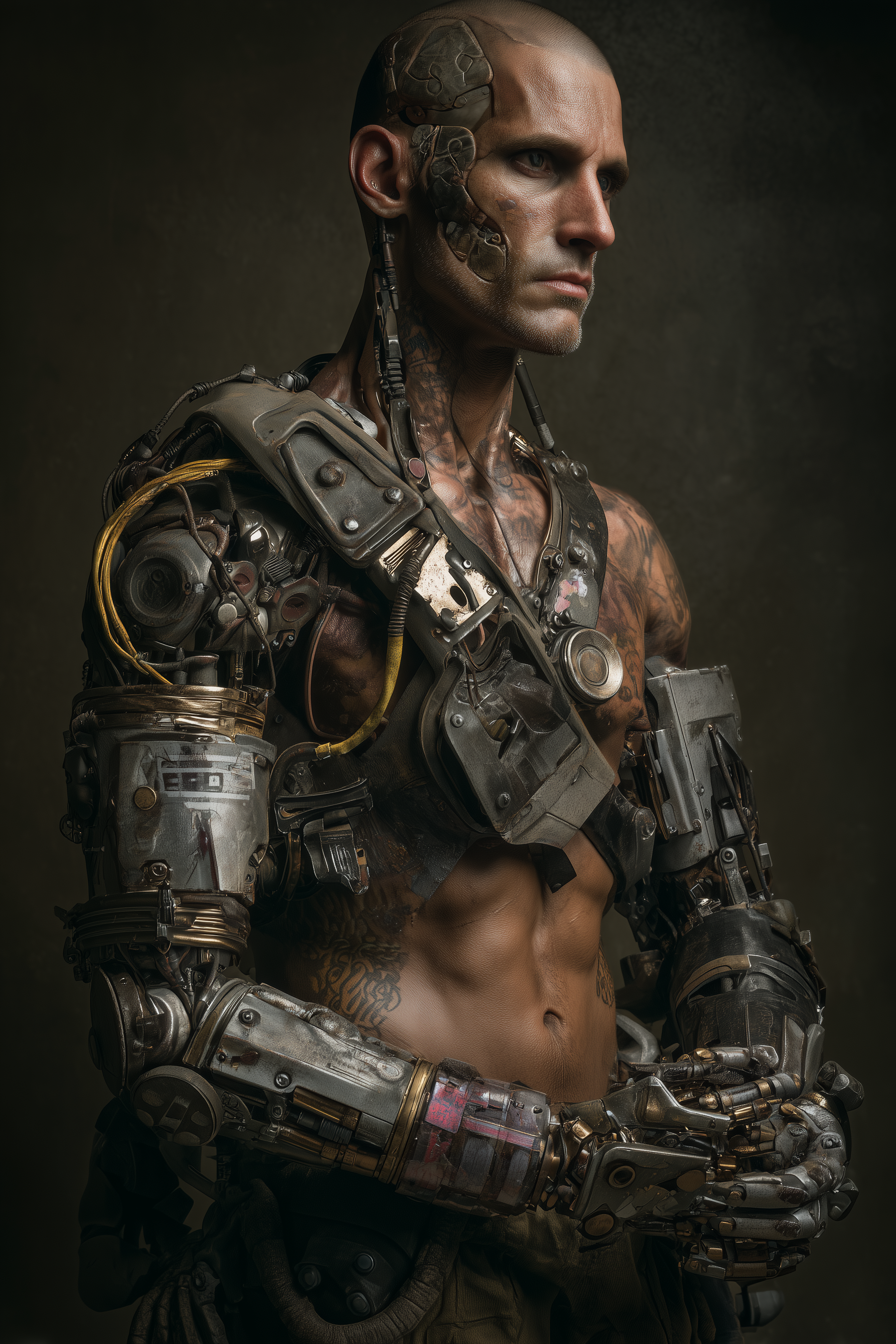
The Collective operates from a sprawling network of abandoned medical facilities throughout eastern Canamer, specializing in extreme experimental augmentations that push the boundaries of human-machine integration. Under the leadership of Rim 4, the organization has become synonymous with radical biomodification approaches that legitimate medical establishments refuse to attempt.
Distinguished by their philosophy that modification should be an ongoing process rather than a finished product, The Collective offers augmentations designed for continuous customization and evolution. This approach attracts clients who view their bodies as works in progress, platforms for perpetual enhancement and transformation.
"Evolution is a work in progress."
— The Collective's Motto
Leadership
Rim 4
The Collective's leader, known as Rim 4, embodies the organization's philosophy through constant self-experimentation and jarring modifications that have become The Collective's trademark. Rim 4's appearance serves simultaneously as advertisement, warning, and proof of concept—demonstrating both the possibilities and risks of extreme augmentation.
His background includes extensive technical expertise in data manipulation (demonstrated by successfully deceiving the Vox Mentis regarding The Unmarked Sanctuary) and deep knowledge of biomodification technology. This combination of skills enables The Collective to operate with unprecedented sophistication while maintaining invisibility from regulatory oversight.
Rim 4's leadership style emphasizes experimentation and boundary-pushing, encouraging both clients and Collective technicians to view human biological limits as challenges to overcome rather than constraints to respect. This philosophy attracts both cutting-edge innovators and reckless experimenters, creating a culture where breakthrough and catastrophe exist in constant tension.
Operations and Infrastructure
Network of Facilities
The Collective operates from a sprawling network of abandoned medical facilities throughout eastern Canamer. These locations—former hospitals, research centers, and specialized clinics shuttered during various economic downturns or regulatory actions—provide ideal infrastructure for The Collective's operations.
The abandoned facilities offer several advantages:
- Existing Medical Infrastructure: Operating theaters, imaging equipment, and specialized rooms that would be prohibitively expensive to construct from scratch
- Multiple Locations: Distribution across eastern Canamer enables rapid relocation if any single facility faces enforcement action
- Legal Ambiguity: Buildings in regulatory limbo, unclear ownership creating bureaucratic barriers to official intervention
- Plausible Deniability: Multiple facilities makes it difficult to prove centralized organization rather than independent operators
- Natural Camouflage: Abandoned medical facilities attract little attention in Canamer's deteriorating districts
Security Measures
Despite operating from seemingly abandoned buildings, The Collective maintains sophisticated security:
- Lookouts monitoring approaches to each facility
- Biometric access controls on critical areas
- Quick-response teams capable of evacuating personnel and destroying evidence
- Data distributed across multiple locations to prevent total loss in raids
- Relationships with Canamer enforcement providing advance warning of planned actions
Specialties and Services
Experimental Mechanical Limb Replacements
The Collective specializes in mechanical limb replacements that go far beyond simple prosthetics or standard augmentations. Their replacements incorporate experimental technologies, unconventional power sources, and capabilities that regulatory agencies have deemed too dangerous or unpredictable for commercial deployment.
These limbs often feature:
- Strength enhancements exceeding safety regulations
- Integrated weaponry or concealed tools
- Sensory capabilities beyond normal human ranges
- Experimental neural interfaces providing unprecedented control precision
- Modular attachment points for swapping components based on need
Open-Architecture Modifications
A distinctive Collective innovation involves designing augmentations with open architecture that allows user customization. Rather than sealed, proprietary systems requiring specialist maintenance, Collective modifications enable clients to upgrade, modify, and personalize their augmentations over time.
This approach appeals to clients who view augmentation as ongoing project rather than one-time procedure. The open architecture also creates dependency on The Collective's network for parts and expertise, generating recurring revenue while building customer loyalty.
Biometric Security Bypass Systems
The Collective offers augmentations specifically designed to defeat biometric security measures. These systems can spoof fingerprints, retinal patterns, and other biological identifiers, making them highly valued by those engaged in corporate espionage, theft, or infiltration.
Such modifications represent some of The Collective's most legally problematic offerings, as their primary use cases involve criminal activity. However, they also attract clients working in intelligence, security testing, and legitimate penetration testing who require these capabilities for authorized purposes.
Self-Modifying Augmentations
Perhaps The Collective's most ambitious specialty involves augmentations that adapt over time. Using experimental nanotechnology and AI-driven systems, these modifications continuously optimize themselves based on user behavior, environmental conditions, and performance feedback.
Self-modifying augmentations represent the bleeding edge of biomodification technology, incorporating artificial intelligence systems that learn and evolve. The long-term effects remain unknown, creating both excitement and concern among recipients. Some users report augmentations developing capabilities beyond their original specifications; others experience unpredictable malfunctions as adaptive systems pursue optimization strategies that conflict with user intentions.
Modification Philosophy
"Unfinished" by Design
The Collective is known for leaving modifications "unfinished" if clients desire, allowing for ongoing customization. This philosophy stands in stark contrast to traditional medical approaches that emphasize completing procedures to final, stable states.
The "unfinished" approach offers several perceived benefits:
- Flexibility: Augmentations can be adjusted as client needs or preferences change
- Upgradability: New technologies can be integrated without replacing entire systems
- Experimentation: Clients can test different configurations to find optimal setups
- Identity Fluidity: Physical form becomes as mutable as desired appearance
However, this approach also creates risks. Incomplete modifications may lack safeguards present in finished systems. The ongoing nature of procedures increases infection risk, tissue damage, and psychological stress. Some clients become addicted to the modification process itself, pursuing changes for their own sake rather than functional improvement.
Evolution as Core Principle
The motto "Evolution is a work in progress" reflects The Collective's view that human enhancement should mirror biological evolution—ongoing, responsive to environment, and never reaching a final form. This philosophy resonates with clients who reject the idea of human nature as fixed, viewing biology as merely the starting point for conscious self-design.
Critics argue this philosophy encourages dangerous experimentation and feeds psychological compulsion. Supporters counter that it represents authentic human freedom—the right to determine one's own physical form without constraints imposed by regulatory bodies or biological conservatism.
Current Activities
Banned Replicator Technology
The Collective is currently experimenting with banned replicator technology to create highly illegal human clones for wealthy clientele. This represents one of the most serious violations of Corporate Era law, touching on fundamental questions about identity, personhood, and human rights.
The replicator program reportedly offers several services:
- Organ Replacement: Cloned organs genetically matched to recipients, eliminating rejection risk
- Backup Bodies: Complete clones maintained for consciousness transfer in event of catastrophic injury
- Labor Duplicates: Clones created to perform work while originals enjoy leisure
- Immortality Attempts: Sequential consciousness transfer between clones to achieve practical immortality
Legal and Ethical Implications
Human cloning remains strictly prohibited throughout human space, banned under the Framework Accords that established basic rights and limitations following the Rush Era's excesses. The prohibition stems from concerns about:
- Consciousness and personhood of clones
- Potential for exploitation and slavery
- Identity confusion and legal complications
- Unforeseen psychological effects on both clones and originals
- Possibility of cloning for criminal purposes (perfect scapegoats, identity theft)
The Collective's cloning program, if confirmed, would represent one of the most serious criminal enterprises in the Corporate Era, likely triggering intervention from Pax Authority or other interstellar enforcement agencies rather than local Canamer authorities.
Client Base
Demographics
The Collective attracts diverse clientele united by willingness to accept risk for capabilities unavailable through legitimate channels:
- Corporate Spies: Seeking biometric bypass systems and concealed augmentations
- Criminal Operators: Requiring enhanced physical capabilities or security defeating modifications
- Modification Enthusiasts: Viewing their bodies as ongoing art projects or enhancement platforms
- Wealthy Experimenters: Able to afford cutting-edge modifications and accept associated risks
- Medical Refugees: Individuals whose conditions cannot be treated through approved methods
- Transhumanist Ideologues: Committed to human enhancement regardless of legal restrictions
Motivation Patterns
Clients seek The Collective for various reasons beyond simple physical enhancement. Some pursue modifications as acts of rebellion against social norms or governmental control. Others view augmentation as essential to professional success in competitive environments. Still others suffer from body dysmorphia or identity issues that conventional medicine cannot address.
The psychological profiles of Collective clients often show higher risk tolerance, lower conformity to social expectations, and stronger beliefs in individual autonomy compared to general population. This creates a self-selecting client base that reinforces The Collective's transgressive culture.
Relationship to The Syndicate
The Collective operates as part of The Syndicate—the loose network of criminal organizations throughout human space. This affiliation provides:
- Distribution Networks: Access to channels for acquiring restricted materials and technologies
- Client Referrals: Syndicate members directing clients to The Collective for specialized modifications
- Protection: Mutual defense arrangements discouraging enforcement action
- Information Sharing: Intelligence about regulatory actions, competing operations, and market opportunities
- Financial Services: Money laundering and untraceable payment processing
However, The Collective maintains substantial operational independence within The Syndicate structure. Rim 4's technical expertise and the specialized nature of augmentation services give The Collective leverage in Syndicate politics, allowing it to resist directives from other member organizations when conflicts arise.
Risks and Controversies
Medical Complications
The Collective's experimental approaches result in significantly higher complication rates than legitimate augmentation providers. Infections, rejection events, neural interface malfunctions, and unexpected interactions between modifications create substantial health risks.
The organization's philosophy of "unfinished" modifications exacerbates these risks by creating persistent open wound sites and ongoing tissue trauma. Some clients experience cascading system failures as multiple augmentations interact in unpredicted ways.
Psychological Impact
The continuous modification process can create psychological dependencies and identity dissociation. Clients may lose sense of stable self as their physical form remains in constant flux. The boundary between enhancement and self-harm becomes blurred when modification becomes compulsive.
Regulatory Response
Canamer authorities periodically attempt crackdowns on The Collective's operations, with limited success. The organization's distributed structure, advance warning systems, and ability to rapidly relocate make permanent closure difficult. Successful raids typically capture only lower-level personnel and recoverable equipment while core leadership and critical data escape.
The cloning program, if proven, could trigger more serious intervention from Pax Authority or interstellar regulatory bodies, potentially ending The Collective's current operational model.
Cultural Impact
Symbol of Body Autonomy
For some, The Collective represents ultimate expression of individual autonomy—the right to modify one's own body without governmental or corporate permission. This perspective views restrictive augmentation regulations as paternalistic control rather than legitimate safety measures.
Warning Example
Others view The Collective as cautionary tale about the dangers of unregulated modification. High-profile failures, medical disasters, and psychological breakdowns among Collective clients serve as evidence supporting strict augmentation oversight.
Innovation Driver
Paradoxically, techniques pioneered by The Collective sometimes eventually inform legitimate medical advances, as experimental approaches that prove safe and effective gradually gain acceptance. This underground innovation pipeline means The Collective contributes to medical progress even while operating outside legal frameworks.
Future Prospects
The Collective's future depends on several factors: success in evading enforcement actions, outcomes of experimental programs (particularly cloning), and broader societal attitudes toward augmentation regulation.
As augmentation technology advances and becomes more accessible, demand for The Collective's services may increase or decrease. If legitimate providers offer more radical modifications, The Collective's market niche may shrink. Conversely, if regulatory oversight tightens, more clients may seek underground alternatives.
The cloning program represents both opportunity and threat—potentially opening lucrative new revenue streams while risking the kind of enforcement response that could dismantle the organization entirely.
Significance
The Collective occupies a unique position in Corporate Era society—simultaneously pushing boundaries of human enhancement, enabling dangerous experimentation, and raising fundamental questions about bodily autonomy, identity, and the proper limits of self-modification.
Whether viewed as liberation movement or criminal enterprise, The Collective undeniably represents a significant phenomenon in human society's ongoing struggle to define the relationship between biological heritage, technological capability, and individual freedom.
The organization's motto—"Evolution is a work in progress"—captures both its promise and its danger: the idea that human nature remains unfinished, subject to conscious redesign, contains both transformative potential and catastrophic risk. The Collective embodies this tension, operating at the frontier where enhancement meets modification, where improvement blurs into harm, where freedom of choice confronts questions of wisdom.