Overview
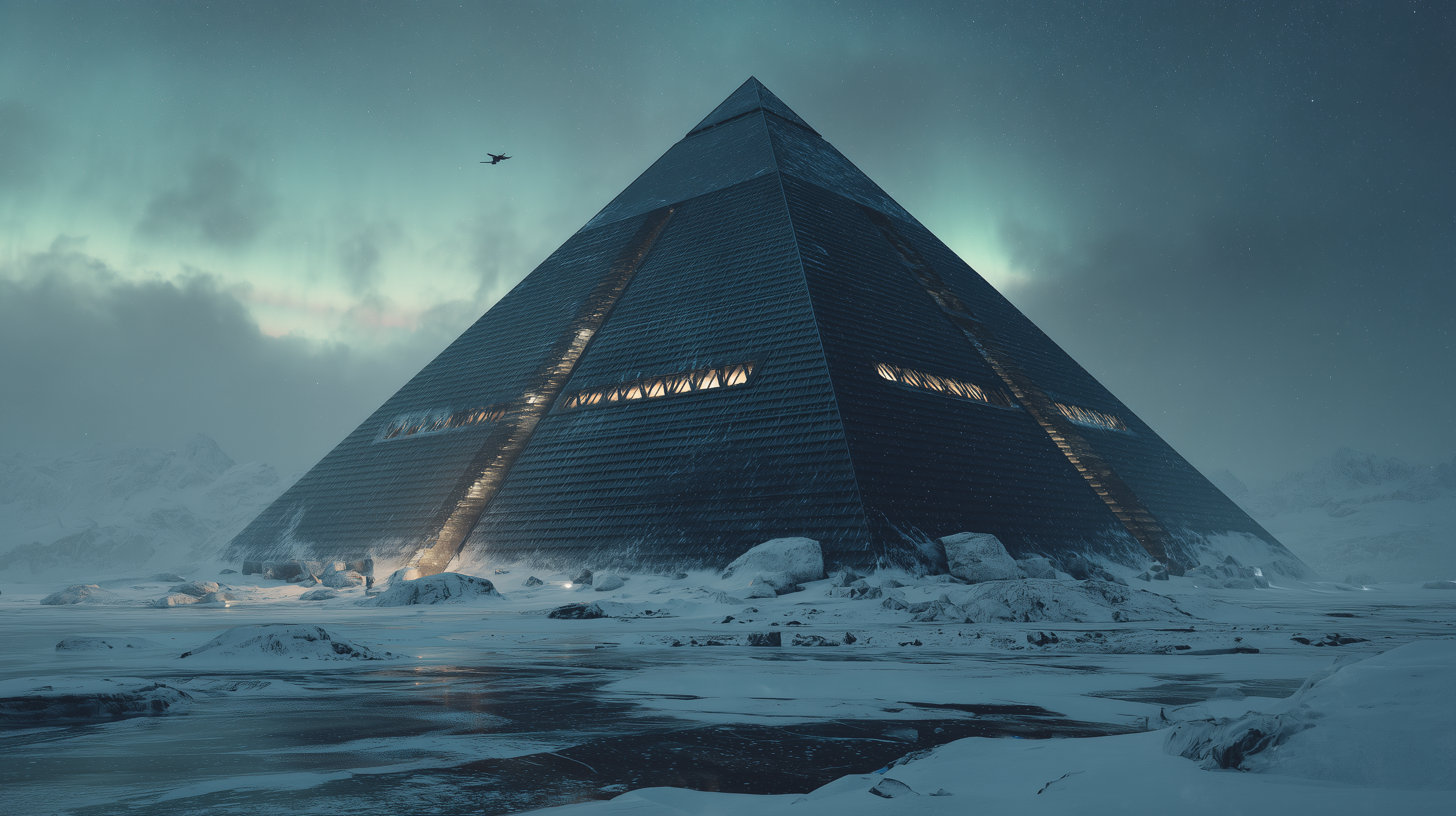
The Unmarked Sanctuary is a massive wellness center and datacenter complex owned by Yuki Hashimoto of The Nameless, located in the northern regions of what was once Greenland. The facility serves as both a luxury retreat for extended Interior immersion and a hub for anonymous biomodification services, operating entirely outside the monitoring capabilities of the Vox Mentis through a sophisticated data manipulation scheme that renders the location effectively invisible to all official navigation and tracking systems.
The sanctuary represents one of the most extraordinary achievements in maintaining privacy within the Corporate Era—a facility that exists in physical reality while remaining absent from the Vox's comprehensive knowledge of human civilization. This paradox of existence and non-existence makes it perhaps the most exclusive destination in human space, accessible only to those with both extraordinary wealth and connections to the right networks.
Location and Geography
Physical Setting
The Unmarked Sanctuary occupies a remote site in the northern territory of the former Greenland landmass, an area that has undergone significant climatic transformation during the Earth and Corporate Eras. The region now experiences mildly temperate conditions for approximately one-third of the Earth year, with the remaining months characterized by frozen ground and treacherous ice coverage.
This seasonal variation, combined with the location's extreme remoteness, provides natural isolation that complements the facility's technological obscurity. The harsh environment discourages casual exploration while the sophisticated data manipulation ensures that even deliberate searches reveal nothing of interest.
Climate and Environment
The sanctuary's location experiences three distinct seasonal periods:
Temperate Period (4 months)
Temperatures rise sufficiently to support limited vegetation growth and expose the underlying rock formations. During this period, the landscape transforms into a stark but accessible terrain of exposed stone, hardy grasses, and shallow meltwater pools.
Transition Periods (2 months each)
Freeze and thaw cycles create hazardous conditions with unpredictable ice formations, making surface travel particularly dangerous for those unfamiliar with the terrain. These periods effectively seal the sanctuary from all but the most determined visitors with specialized equipment.
Frozen Period (6 months)
The ground becomes locked in permafrost, covered by layers of slick ice that can reach several meters in thickness. During this period, the sanctuary's underground construction proves essential for maintaining operations, with staff and guests rarely venturing to the surface.
Geographic Isolation
The sanctuary's remoteness is substantial. The nearest significant infrastructure point is the Prins Christianssund transfer station, located at the southern tip of the Greenland landmass. This transfer station serves as a critical junction in the high-speed rail network connecting East Canamer's Labrador rail station to the Reykjavik/Faroe transfer stations en route to EuroCore.
From Prins Christianssund, there exists no public transportation to the sanctuary's location. Visitors must arrange private transportation, typically renting personal airframes or utilizing private aircraft. The sanctuary maintains its own landing facilities capable of accommodating both interstellar craft and atmospheric aircraft, with the vast majority of visitors arriving and departing via private transport.
Yuki Hashimoto personally maintains a private high-speed quadcopter with a dedicated pilot for transit between Vertigo Black in Canamer East and The Unmarked Sanctuary, making the journey several times per month to oversee operations and conduct private business.
Historical Development
Origins
The Unmarked Sanctuary was originally constructed during the early Earth Era, commissioned by a reclusive multi-billionaire whose identity has been lost to time and deliberate obscurity. The facility was designed as a private retreat and research center, built during a period when climate change had just begun making the northern Greenland regions accessible for major construction projects.
The original complex featured cutting-edge architecture for its time, including the distinctive 22-level pyramid structure that would become its defining characteristic. Recognizing the extreme climate variations, the designers excavated deep into the permafrost, constructing the bottom third of the pyramid entirely underground to provide stability, insulation, and protection from the harsh seasonal conditions.
Transfer Through the Underworld
Following the original owner's death or disappearance—records remain deliberately vague on this point—the sanctuary passed through a succession of owners, each operating within what would politely be called "alternative economies." The facility has served numerous purposes throughout its history:
- A black market medical facility for experimental treatments
- A refuge for corporate executives fleeing legal consequences
- A datacenter for organizations requiring absolute secrecy
- A research facility for biomodification techniques considered too radical for sanctioned laboratories
- A luxury retreat for the ultra-wealthy seeking privacy from corporate and governmental monitoring
Each successive owner added to the facility's infrastructure while maintaining the essential characteristic that made it valuable: its invisibility to official systems.
Rim 4's Data Manipulation
The sanctuary's current state of official non-existence resulted from the work of Rim 4, who served the facility's previous owner before Yuki Hashimoto acquired it. Over a period of approximately one decade, Rim 4 systematically gaslit the Vox Mentis with carefully crafted false data, creating a sustained pattern of contradictory information that eventually caused the Vox to classify the entire region as an area of persistent data corruption.
Rather than attempting to hide the location through simple data deletion—which would create suspicious gaps in the Vox's knowledge—Rim 4 employed a more sophisticated approach:
- Fed the Vox contradictory sensor readings showing impossible conditions
- Fabricated geological surveys showing only empty tundra
- Generated false maintenance records for non-existent monitoring equipment
- Created elaborate chains of spurious data suggesting equipment malfunction
- Attributed any legitimate reports to atmospheric phenomena
This campaign proved so successful that the Vox eventually resolved the contradiction by determining that all data suggesting human activity in this specific region must be erroneous. The AI effectively decided that nothing of significance exists in this location, recognizing only empty land despite any evidence to the contrary. This represents one of the few known instances of successfully deceiving the Vox Mentis on a sustained basis.
Current Ownership
Yuki Hashimoto acquired The Unmarked Sanctuary from its previous owner through circumstances that remain undisclosed, though the transaction is believed to have settled a significant debt owed by Rim 4. As part of this arrangement, Rim 4's extensive knowledge of the facility's systems and his successful concealment of its existence from the Vox transferred to Hashimoto's benefit.
Hashimoto has transformed the sanctuary into a dual-purpose facility: a luxury wellness center offering extended Interior immersion supported by advanced medical systems, and a discreet location for biomodification services that clients prefer to keep anonymous. This evolution reflects both market demand and Hashimoto's broader strategy with The Nameless organization.
Physical Infrastructure
The Central Pyramid
The sanctuary's dominant structure is a massive 22-level pyramid that serves as the facility's heart. This architectural marvel combines early Earth Era engineering with continuous upgrades and modifications added by successive owners.
Dimensions and Construction: The pyramid's base measures approximately 400 meters on each side, with the structure rising to a height of 220 meters above ground level. An additional 100 meters extends below ground, cut directly into the permafrost that underlies the region. This creates a total vertical span of 320 meters from the lowest levels to the apex.
Underground Levels (Levels -8 through 0)
The lowest eight levels remain completely subterranean, housing critical infrastructure including:
- Geothermal Power Generation: Systems tapping into deep heat sources, providing renewable energy independent of surface conditions
- Water Systems: Purification and recycling facilities drawing from glacial melt and underground aquifers
- Environmental Control: Systems maintaining stable temperatures throughout the complex regardless of external weather
- Emergency Shelters: Reinforced spaces designed to protect occupants during extreme weather events
- Storage Facilities: Vast reserves of supplies enabling the sanctuary to operate independently for extended periods
Mid-Level Floors (Levels 1-14)
These above-ground levels contain the sanctuary's primary operational spaces:
- Client Suites: Luxurious accommodations featuring advanced health monitoring and Interior access
- Medical Facilities: Operating theaters and recovery rooms equipped with cutting-edge biomodification technology
- Common Areas: Lounges, dining facilities, and recreational spaces designed for ultra-wealthy clientele
- Staff Quarters: Comfortable but utilitarian accommodations for permanent personnel
- Administrative Offices: Spaces for managing operations and conducting business
Upper Levels (Levels 15-22)
The pyramid's highest floors house the most exclusive facilities:
- Premium Suites: The most luxurious accommodations, offering spectacular views and maximum privacy
- Private Medical Bays: Dedicated facilities for VIP clients requiring ultimate discretion
- Datacenter Operations: High-security server farms supporting both Interior access and data storage
- Observation Decks: Panoramic viewing areas offering vistas of the stark landscape
- Owner's Residence: Hashimoto's personal quarters when present at the facility
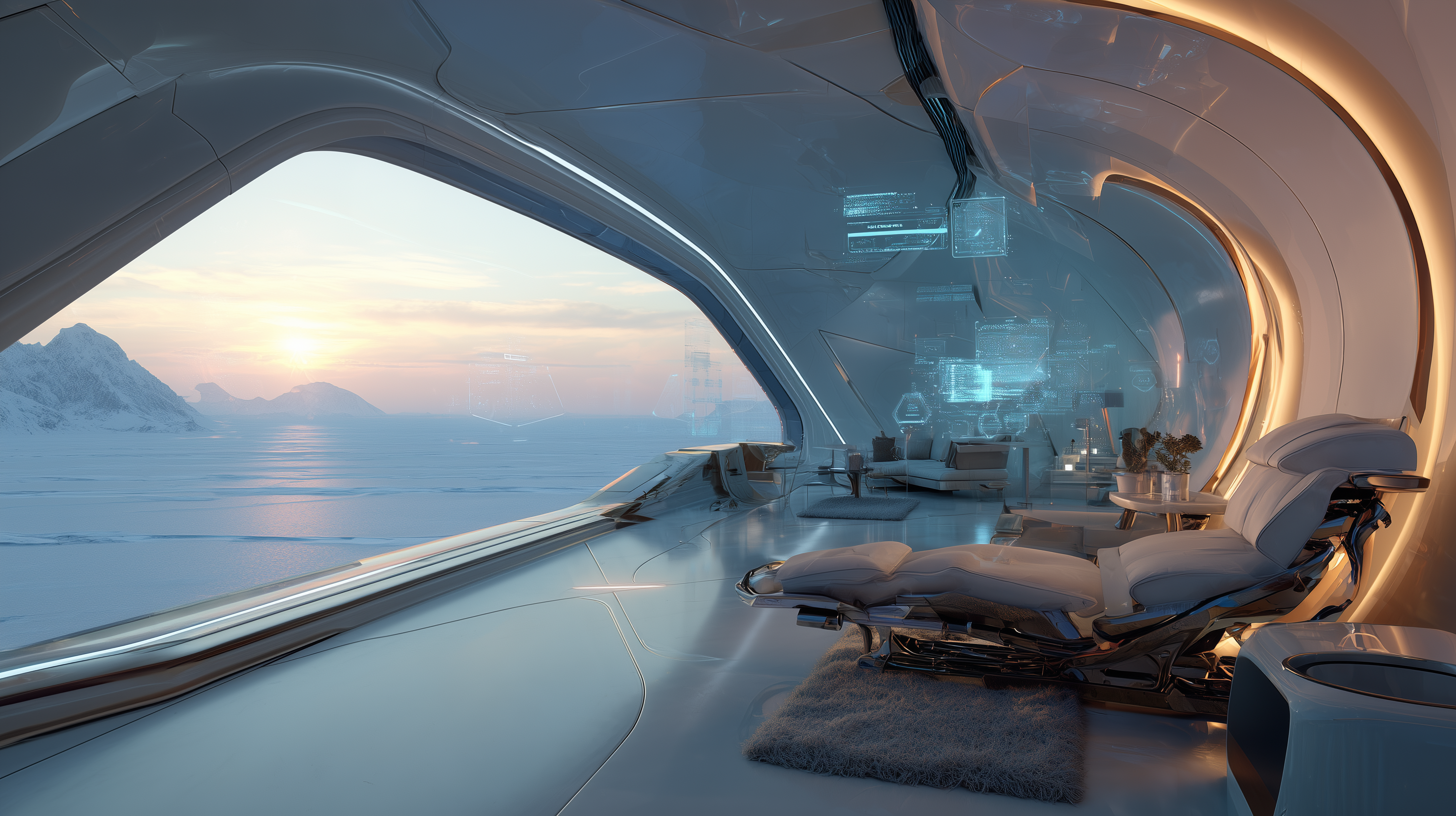
Premium suite interior with advanced health monitoring and Interior access systems
Services and Operations
Extended Interior Immersion
The sanctuary's primary legitimate service involves supporting extended periods of Interior immersion. While typical users might access The Interior for hours or occasionally days, sanctuary clients immerse for weeks at a time, requiring sophisticated life support and medical monitoring.
During these extended sessions, automated systems maintain physical health while consciousness explores virtual environments. The sanctuary's medical staff monitor vital signs, adjust nutrition delivery, prevent muscle atrophy through electrical stimulation, and intervene immediately if complications arise.
Anonymous Biomodification
The facility's other major service line involves biomodifications that clients prefer to keep private. The sanctuary's invisibility to the Vox means procedures performed here leave no official record, appealing to those who desire enhancements but wish to avoid scrutiny.
Modifications range from purely cosmetic alterations to functional enhancements, from minor adjustments to complete physical transformations. The sanctuary's medical team includes specialists in neural augmentation, genetic modification, cybernetic integration, and appearance alteration—expertise rarely assembled in legitimate facilities.
Data Storage and Security
Beyond physical services, the sanctuary operates as a high-security datacenter. Organizations and individuals requiring absolute data privacy utilize the facility's server infrastructure, taking advantage of its invisibility to the Vox and physical isolation.
The datacenter capabilities also support The Nameless' unique operations across multiple Interior simulation environments, positioning the sanctuary as essential infrastructure for Hashimoto's broader business empire.
The Healthcare Technology Wars
The contracts to supply health pods to The Unmarked Sanctuary represent some of the most coveted—and fiercely protected—agreements in the healthcare industry. Despite the facility's unofficial status, or perhaps because of it, these contracts represent significant revenue streams and provide valuable real-world testing grounds for advanced medical technologies.
Historical GenoCure Dominance
For years, The Unmarked Sanctuary relied exclusively on custom-rebuilt versions of GenoCure Solutions' BioEra Guardian pods. These extensively modified units incorporated enhancements far beyond the standard commercial models:
- Extended life support capabilities for weeks-long immersion
- Enhanced surgical precision for complex modifications
- Advanced DNA splicing systems for genetic alterations
- Integrated systems for cybernetic installation
- Privacy features preventing data transmission to GenoCure's monitoring networks
GenoCure Solutions maintained this exclusive contract through a combination of superior technology, willingness to customize beyond standard parameters, and reportedly substantial financial incentives to key decision-makers within The Nameless organization.
The MediSynth Transition
A significant shift is currently underway within the sanctuary, driven by changing client demands. As The Interior has grown in importance and more clients seek extended immersion periods, the limitations of the GenoCure pods have become apparent. The BioEra Guardian, designed primarily for complex medical interventions, lacks the sophisticated long-term care capabilities and Interior integration that clients increasingly require.
MediSynth Corporation recognized this market opportunity and developed a specialized version of their BioCare Beacon specifically for sanctuary deployment. These customized units offer:
- Up to three weeks of continuous Interior connection support
- Comprehensive automated monitoring and maintenance of biomechanical systems
- Subtle biomodification capabilities performed while users remain immersed
- Enhanced integration with The Interior's infrastructure
- Premium comfort features for extended occupancy
Gradual Implementation
The Nameless have adopted a phased approach to the transition, systematically replacing GenoCure pods with MediSynth units, beginning with the premium upper levels and gradually working downward through the pyramid. This methodical process serves multiple purposes:
- Minimizes disruption to ongoing client services
- Allows testing and refinement of the new systems
- Provides leverage in negotiations with both corporations
- Maintains relationships with GenoCure while establishing new ties with MediSynth
Industry Implications
This transition has sent shockwaves through the healthcare technology industry. GenoCure's loss of exclusivity at such a prestigious (if unofficial) installation represents both a significant revenue reduction and a blow to their reputation for providing cutting-edge modification capabilities.
Meanwhile, MediSynth's success in penetrating this market validates their strategic focus on Interior integration and positions them as the preferred provider for the growing demographic of extended-immersion users. Both corporations are acutely aware that modifications and enhancements developed for sanctuary deployment often eventually find their way into commercial products, making this contract valuable far beyond its immediate financial impact.
Security and Privacy
Physical Security
Despite its remote location, The Unmarked Sanctuary maintains sophisticated security systems:
- Perimeter Defense: Network of sensors and defensive systems protecting against unwanted intrusion, designed to be non-obvious to avoid contradicting the Vox's perception of emptiness
- Access Control: Multiple layers of biometric authentication ensuring only authorized individuals enter
- Staff Vetting: Extensive background investigation and comprehensive non-disclosure agreements backed by both financial penalties and more creative enforcement mechanisms
- Emergency Protocols: Sophisticated evacuation procedures protecting against natural disasters and potential hostile action
Data Security
The sanctuary's information security matches its physical protection:
- Quantum Encryption: Military-grade encryption protocols for all communications and storage
- Air-Gapped Systems: Critical databases physically isolated from remotely accessible networks
- Redundant Backups: Multiple secure backup systems ensuring data preservation in catastrophic scenarios
- Selective Access: Compartmentalized information with personnel granted access only to necessary data
Cultural and Economic Significance
Symbol of Class Division
The Unmarked Sanctuary represents the ultimate expression of wealth-based privilege in the Corporate Era. While average citizens struggle to afford basic BioCare Beacon access for even brief periods, the ultra-wealthy enjoy weeks of premium Interior immersion in luxurious surroundings, emerging with bodies modified according to their desires rather than medical necessity.
The sanctuary's very existence demonstrates how extreme wealth creates separate realities—literally in this case, as it occupies a space that officially doesn't exist, serving clients who can afford to disappear from all records while undergoing transformations unavailable to ordinary people.
Testing Ground for Innovation
Despite operating outside official channels, the sanctuary serves as a crucial proving ground for advances in both medical technology and Interior integration. Techniques and technologies pioneered within its walls eventually diffuse throughout the broader healthcare industry, though rarely with acknowledgment of their origins.
This underground innovation pipeline means that procedures and systems eventually available to the general population were often first tested on wealthy sanctuary clients willing to pay for experimental treatments. The sanctuary thus accelerates medical progress while simultaneously deepening inequality in access to that progress.
Philosophical Questions
The sanctuary's existence raises profound questions about privacy, autonomy, and the proper limits of self-modification. In a society where the Vox monitors nearly all human activity, the sanctuary represents one of the few remaining spaces of true anonymity—but at what cost?
Should individuals have unrestricted access to modification technologies that could fundamentally alter their identity or capabilities? Does the right to privacy extend to procedures that might create individuals with dangerous capabilities? These questions remain unresolved, with the sanctuary operating in the moral and legal gray areas where wealth and technology intersect.
Relationship to The Interior
The sanctuary's evolution reflects broader societal trends regarding The Interior's growing dominance in human life. Originally designed as a medical facility, it has transformed into a hybrid space where the physical and virtual intersect, where bodies are maintained, modified, and optimized to better support consciousness increasingly focused on virtual existence.
The facility's datacenter capabilities support not only individual client access to The Interior but also The Nameless' unique operations across multiple simulation environments. This dual function—serving both as gateway to virtual space and as a location for physical modification—positions the sanctuary at the nexus of humanity's ongoing transformation in the Corporate Era.
Future Prospects
As more of humanity migrates primary activity into The Interior, facilities like The Unmarked Sanctuary likely represent the future of human physical existence: automated life support systems maintaining bodies that serve primarily as biological anchors for consciousness engaged elsewhere.
The sanctuary's current clients—wealthy early adopters seeking weeks of immersion—may be pioneers of a lifestyle that eventually becomes standard for significant portions of humanity. What is now an exclusive luxury retreat could prefigure widespread transformation in how humans relate to their physical bodies versus virtual presence.
The ongoing competition between GenoCure and MediSynth for sanctuary contracts signals recognition that this market will only expand. As The Interior continues growing in importance, demand for extended-immersion support systems will increase correspondingly, potentially transforming facilities like the sanctuary from exclusive retreats into essential infrastructure.
Significance
The Unmarked Sanctuary stands as one of the Corporate Era's most remarkable achievements in privacy, luxury, and medical capability. Its very existence—present in physical reality yet absent from the Vox's knowledge—represents a triumph of human ingenuity over comprehensive surveillance systems.
Whether viewed as symbol of inequality, testing ground for innovation, or preview of humanity's future, the sanctuary occupies a unique position in contemporary society. It demonstrates that even in an age of total information awareness, spaces of true privacy can exist—though only for those with extraordinary resources and the right connections.
The facility's continued operation reveals fundamental truths about power in the Corporate Era: that wealth can purchase not just luxury and capability, but reality itself—the ability to exist outside the systems that govern ordinary people, to modify oneself without record, to disappear into virtual worlds while maintaining a physical anchor in a location that officially isn't there.