Overview
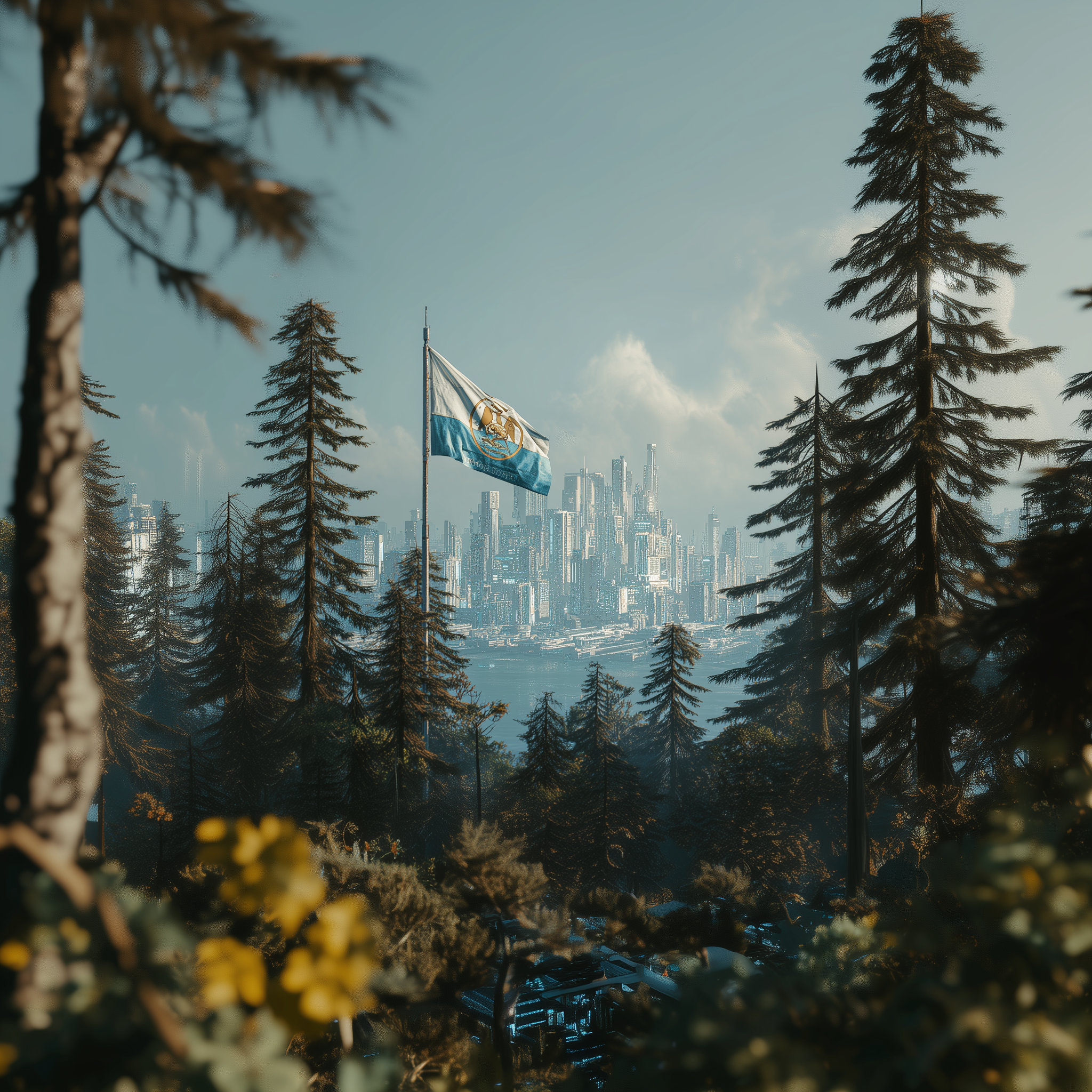
Canamer is a major urban-agricultural complex on Earth comprising two sprawling coastal metropolises connected by an extensive high-speed rail network. Formed through the political merger of the former United States and Canada in response to climate crisis, Canamer encompasses the entirety of Canada, the former U.S. state of Alaska, and the northern portions of former U.S. states of Washington, Montana, North Dakota, and Minnesota.
With a population of approximately 120 million, Canamer is the smallest of the Earth cities; however, it historically represents one of the most significant human settlements of the Earth era. The federation emerged from catastrophic environmental change that rendered southern regions of North America uninhabitable, triggering massive northward migration and eventual political unification.
Geography and Structure
Dual Metropolitan Centers
Canamer consists of two primary urban centers—Canamer East and Canamer West—situated on opposite coasts of the North American continent. These cities represent the concentrated population and industrial cores of the federation, housing government facilities, corporate headquarters, and the majority of Canamer's inhabitants.
Subterranean Transit Network
The cities are linked by a massive, predominantly subterranean high-speed rail system that surfaces at select locations. This engineering marvel allows rapid transit between coasts while minimizing disruption to the agricultural zones that dominate the interior. The rail network represents one of the largest infrastructure projects undertaken during the Earth Era, spanning thousands of kilometers beneath the northern continent.
Agricultural Zones
The entire northern half of Canamer is dedicated to agricultural production, utilizing formerly inhospitable Canadian territories that became arable due to global temperature increases. These vast farming regions provide food security not just for Canamer but contribute significantly to Earth's overall agricultural output, exploiting climate change conditions that made northern latitudes newly productive.
The transformation of frozen tundra into productive farmland represents one of the few silver linings of planetary warming, though this agricultural expansion remains controversial due to its environmental impacts on ecosystems and water resources.
Historical Development
Climate Crisis and Migration
The establishment of Canamer was precipitated by catastrophic environmental changes during the Earth Era. Dramatic flooding, intensified storm systems, and elevated temperatures rendered the southern United States and eastern seaboard largely uninhabitable for long periods of each year—from southern California across to North Carolina.
This environmental crisis triggered a massive northward migration, with major corporations and their workforces relocating to the northwestern United States and expanding cities and towns along the full U.S. and Canadian border. The scale of this population movement rivaled historical mass migrations, fundamentally reshaping North American demographics and political geography.
Political Unification
Simultaneously, warming temperatures transformed previously frigid northern Canadian regions into valuable agricultural land and freshwater sources. The mutual dependencies that developed between these regions, combined with the fragmentation of the United States into independent territories, eventually culminated in the political unification of former Canadian provinces and northern U.S. states.
The merger occurred not through conquest but through pragmatic recognition of shared interests and interdependence. Southern U.S. territories, dealing with their own climate challenges, fragmented into separate political entities, leaving the northern regions to formalize their de facto integration as the federated entity of Canamer.
Governance
Federal Democratic System
Canamer operates under a federated democratic system with particular emphasis on environmental governance and technological innovation. The Canamer Federal Council serves as the primary legislative body, with representatives elected from regional assemblies across the federation's territories.
Electoral Process
Elections occur quadrennially for positions on the Canamer Federal Council and regional assemblies. The electoral process utilizes a highly secure, decentralized quantum-encrypted voting system accessible via:
- Personal Data Pads: Remote voting through encrypted personal devices
- Public Voting Stations: Integrated with Vox Nodes for secure verification
- Neural Interfaces: Secure VR environments for immersive voting experiences
Despite advanced voting technology ensuring electoral integrity, Canamer's political landscape is characterized by intense polarization and factional rivalry. Deep cultural divisions create an atmosphere of public distrust that occasionally manifests as civil unrest, challenging the federation's stability.
Economy and Social Structure
Profound Socioeconomic Stratification
The socioeconomic landscape of Canamer exhibits profound stratification that defines daily life for its inhabitants. Corporate elites and technological specialists enjoy unprecedented prosperity, residing in gleaming towers with access to cutting-edge medical technology, unlimited clean water, and abundant high-quality food.
Meanwhile, significant portions of the population endure precarious living conditions in dilapidated high-rises on the urban periphery. Lower socioeconomic groups typically subsist on nutrient-depleted packaged foods and engage in menial labor or gig work arranged through automated platforms that offer minimal security and inconsistent income.
Visual Disparity
This economic disparity manifests visually throughout the cityscape, where gleaming corporate towers and sophisticated technological infrastructure contrast sharply with deteriorating residential districts. The stark juxtaposition creates a landscape of inequality—bright neon advertisements and luxury amenities visible from crumbling housing blocks where basic services remain inadequate.
Community Resilience
Despite these challenges, community solidarity remains strong among disadvantaged populations, with communal spaces serving as important centers for social cohesion. Shared struggles create bonds of mutual support that help residents navigate the complexities of a city that thrives on the dichotomy of wealth and poverty.
Cultural Identity
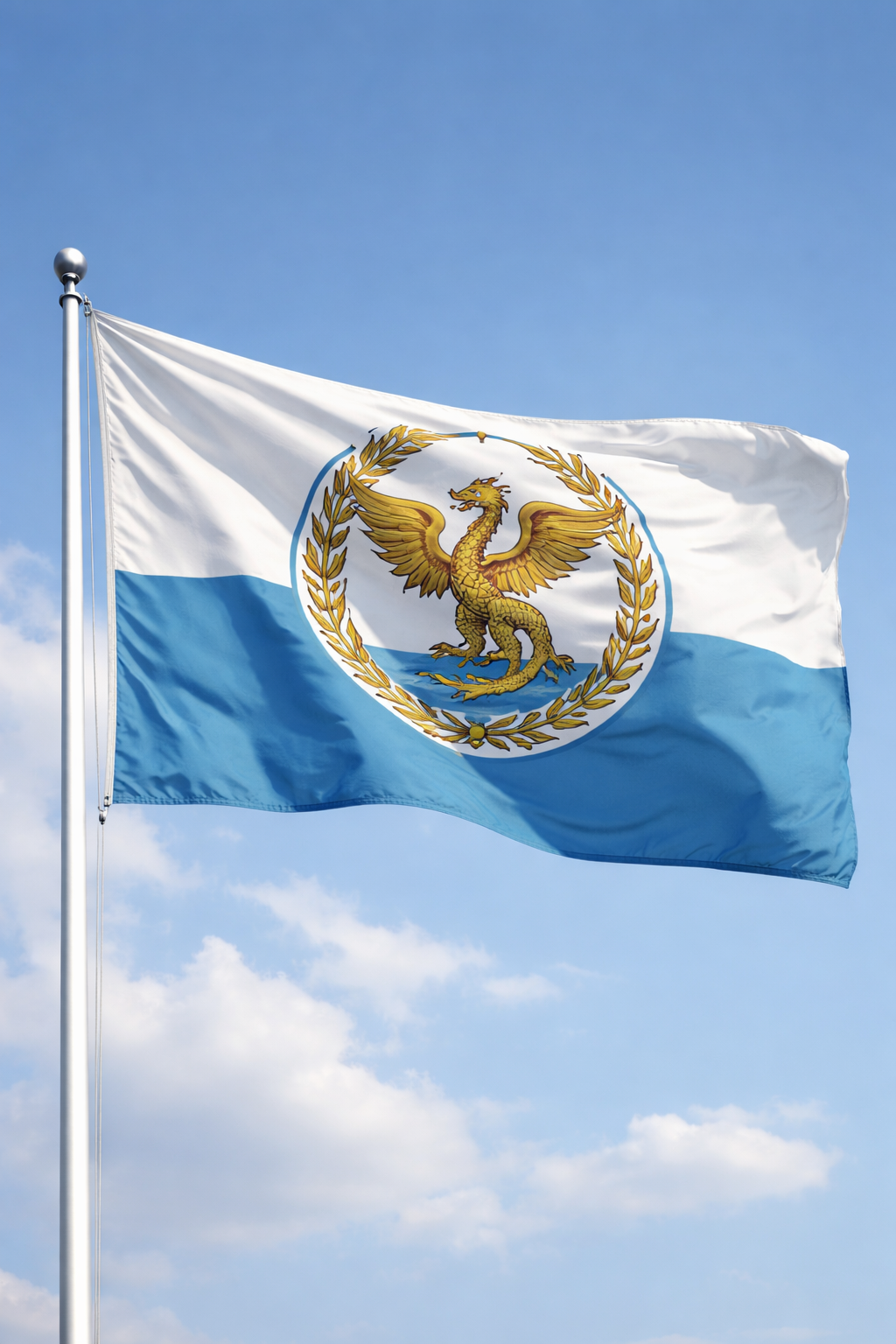
Official Motto: "Unity in Diversity, Strength in Sustainability"
Canamer's official motto reflects its aspirational values, acknowledging both the diversity of its population and the environmental imperatives that drove its formation. The federation's flag features green and blue coloration symbolizing the union of land and sea, with a white silhouette of a dove overlaying a digital globe to represent peace and connectivity in the digital age.
Linguistic Landscape
English serves as both the political and primary language; however, many dialects and languages exist in sectors throughout Canamer. Old languages such as Spanish and Russian intermingle with English, creating unique linguistic hybrids that reflect the region's diverse population and migration patterns.
Deep Cultural Divisions
Canamer is a region marked by profound cultural divisions that complicate its unity. A large district of Canamer East is populated with people identifying with French ancestry, maintaining distinct cultural practices and linguistic preferences that sometimes clash with federal policy.
Meanwhile, a district of Canamer West is populated with residents identifying as "Amerikan"—a cultural identity emphasizing pre-merger American traditions and values. These regional identities create political tensions that the federal government struggles to reconcile, contributing to Canamer's reputation for internal division.
International Relations
Isolation from Global Governance
Canamer remains somewhat isolated from the majority of other Earth cities, choosing not to participate in the committees and organizations which guide human interactivity throughout the world. This deliberate separation reflects Canamer's independent streak and skepticism toward international cooperation that might constrain its sovereignty.
Sinosphere Security Concerns
Sinosphere considers Canamer a security risk due to its relaxed attitude toward development of illicit weaponry, biomodifications, and other controversial technologies. Canamer's permissive regulatory environment attracts research and development that other Earth cities prohibit, creating international tensions over proliferation concerns.
This technological permissiveness stems partly from Canamer's libertarian political culture and partly from economic incentives—controversial tech development provides revenue and employment that the federation is reluctant to sacrifice for international cooperation.
Amazonia Conflict
Amazonia and Canamer are constantly at odds with legal disputes over environmental impacts of Canamer's farming practices. The massive agricultural operations in northern territories generate runoff and emissions that Amazonia claims violate international environmental agreements.
These disputes reflect deeper tensions about climate responsibility—Canamer argues it's utilizing land made arable by climate change it didn't solely cause, while Amazonia contends that Canamer's agricultural expansion accelerates environmental degradation rather than mitigating it.
EuroCore Alliance
EuroCore maintains a robust trade relationship with Canamer and is willing to overlook most issues that trouble other Earth cities. This partnership provides Canamer with crucial economic support and diplomatic cover, while EuroCore benefits from access to Canamer's agricultural output and technological innovations.
The EuroCore-Canamer alliance represents one of the most stable relationships in Earth's fragmented political landscape, built on mutual economic interests that transcend ideological differences.
Political Challenges
The combination of advanced technology and deep political divisions creates a volatile yet dynamic political environment in Canamer. The federation faces constant tension between its aspirational values of unity and sustainability and the reality of internal fragmentation and inequality.
Innovative solutions are desperately needed to foster unity and trust across cultural divides. Some political theorists view Canamer as a microcosm of broader challenges facing human civilization in the Corporate Era—how to maintain democratic governance and social cohesion amid technological acceleration, environmental crisis, and profound inequality.
Despite these challenges, Canamer's resilience should not be underestimated. The federation has survived multiple political crises and economic shocks, adapting each time while maintaining its fundamental structure. Whether this resilience will prove sufficient for long-term stability remains an open question.
Daily Life in Canamer
A Portrait of Inequality
The following excerpt from an award-winning EuroCore Pulse series titled "The Least of Us" by Emilia Novak captures the daily reality for Canamer's disadvantaged populations:
"In Canamer during the Corporate Era, a day in the life of a poor person is often characterized by a relentless struggle against the city's sprawling façade of prosperity. Awakening in a dilapidated high-rise on the fringes of Canamer East, they feel the oppressive weight of the urban landscape, where gleaming corporate towers shadow their existence.
The morning routine unfolds with a rush to a cramped communal bathroom, where scarce hot water is a luxury and health pods remain a distant option due to unaffordable fees. Breakfast is a swift affair—damp, nutrient-depleted packaged food retrieved from a vending machine—paired with tap water, as they can't afford the sparkling alternatives offered in upscale neighborhoods.
The day stretches ahead, filled with instability; jobs are hard to come by, and opportunities often involve menial tasks, such as cleaning or manual labor, organized through informal networks or automated gig platforms. As they traverse the bustling streets of Canamer, the juxtaposition is stark, with bright neon advertisements luring potential customers while they stand in line for subsidized food at a local aid center.
In the evenings, when the city lights flicker to life, they gather with others in community spaces, sharing stories and laughter amidst the backdrop of their shared struggles, dreaming of a day when the divide between them and the corporate elite may finally close. Despite the harsh realities of their existence, the warmth of camaraderie provides a flicker of hope, illuminating their resilience as they navigate the complexities of a city that thrives on the dichotomy of wealth and poverty."
— Emilia Novak, "The Least of Us" (EuroCore Pulse)
This account, while focused on poverty, illustrates broader truths about Canamer's character—a place of stark contrasts where technological sophistication coexists with human struggle, where aspirational ideals conflict with harsh realities.
Significance
As one of Earth's major population centers in the Corporate Era, Canamer represents a critical node in humanity's ongoing adaptation to environmental change and technological advancement. Its development illustrates both the resilience and vulnerability of human civilization in the face of planetary transformation.
Canamer serves as a microcosm of broader trends characterizing this historical period: climate migration reshaping political geography, technological innovation creating new inequalities, cultural pluralism challenging political unity, and the tension between national sovereignty and international cooperation.
The federation's struggles and successes offer lessons about humanity's capacity to adapt to existential challenges while maintaining democratic institutions and social cohesion. Whether Canamer ultimately represents a successful model of climate adaptation or a cautionary tale of inequality and division remains to be determined by future historians.